

Customers come back for two reasons: tape pulled from storage no longer matches the approved swatch, or the face of the tape carries a stain that will not wash out. Both nearly always trace back to storage conditions rather than to a weaving or dyeing fault.
Light destroys colour fastest
UV breaks the bonds in dye molecules. The effect accumulates and cannot be reversed. A roll left near a window for a few weeks fades visibly on the outward-facing side while the core keeps its colour, so the banding only shows once the tape is unwound.
Deep shades and neons go first; reds, oranges and purples are more sensitive than blues or blacks. If the store has windows, fit UV film or simply move the tape racks to the inner wall.
Humidity decides whether you get mould
Polyester and nylon fibre absorb almost no moisture, but the finish, the adhesive and the cardboard core do. That is where mould takes hold, and mould marks on white tape are close to impossible to remove without damaging the surface.
- Keep relative humidity steady rather than chasing a number; sharp day to night swings do the damage.
- Never stand rolls directly on a concrete floor, which wicks moisture up into the core.
- Leave a hand-width gap from the wall so air moves behind the racking.
- Desiccant sachets only work while the carton is still sealed, and they need replacing.
Wind and stack it properly
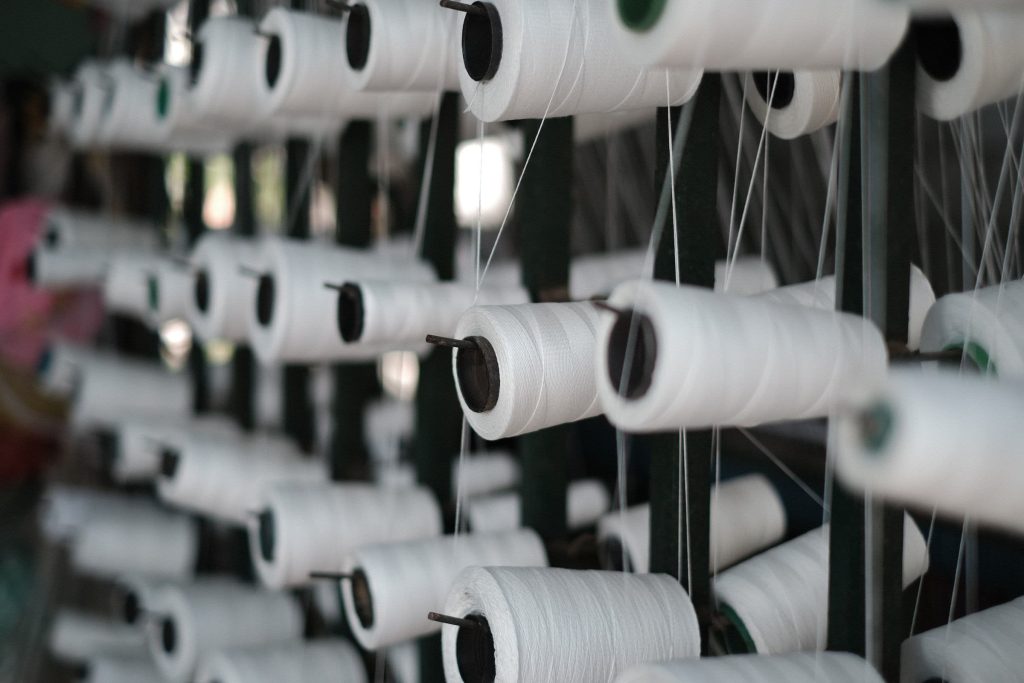
Tape wound too tight leaves a permanent crease at the edge, most obvious on satin ribbon. Wound too loose, it shifts during handling and the outer edge gets scuffed. Wind firmly enough to hold shape, not so firmly that the core deforms.
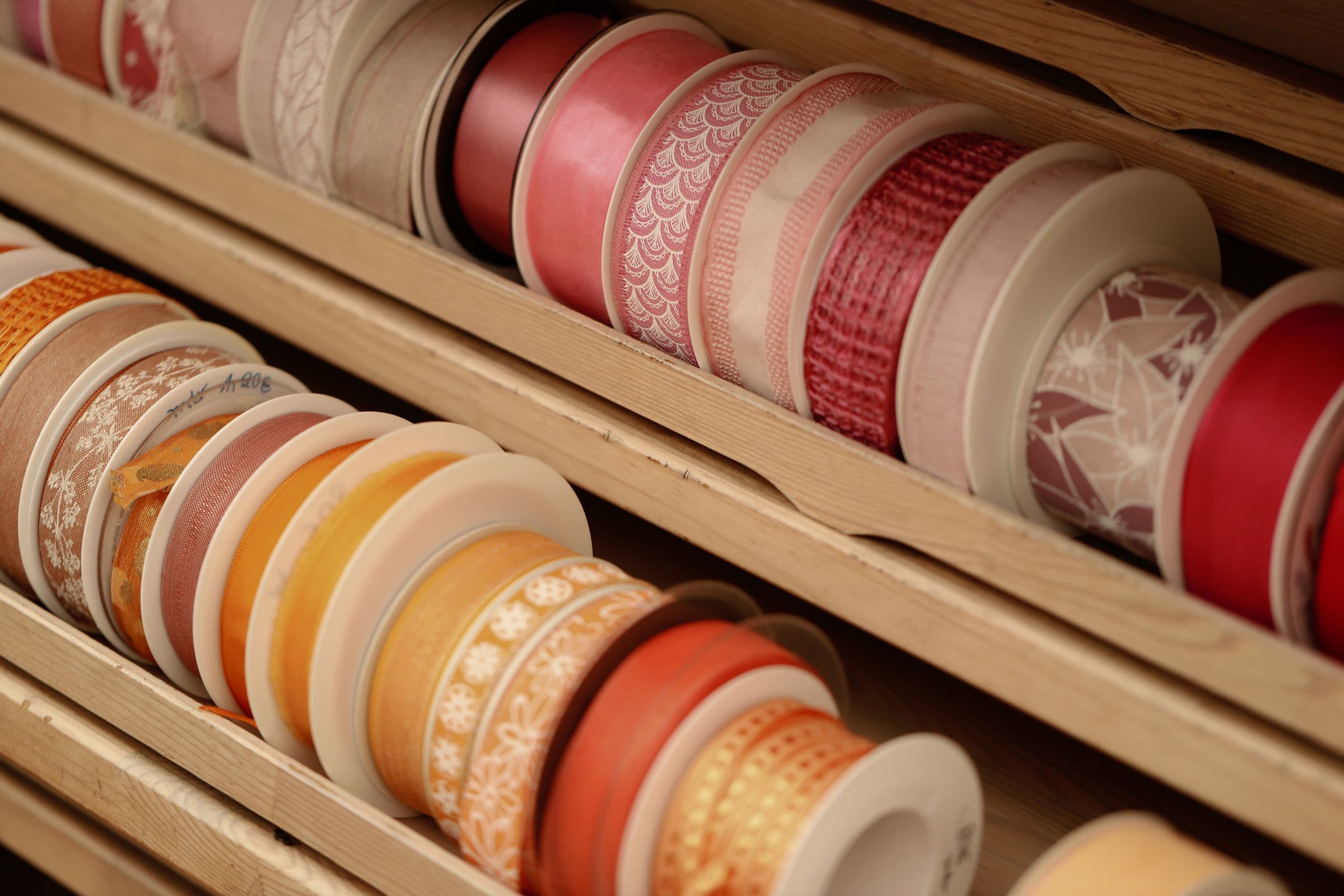
Stacking rolls flat on top of each other crushes the bottom one. Stand them upright in a divided rack, or run a bar through the core if the rolls are heavy.
The shortest rule is first in, first out. A roll that sits for two years will not match freshly dyed stock no matter how well it was kept.
Label by dye lot, not just colour code
Two dye lots of the same colour code always differ slightly. That is normal in this industry. It only becomes a problem when both lots end up on one product and the buyer sees them side by side. Writing the lot number on the roll label and keeping one lot per order is the simplest way to avoid a claim.
When reordering against an old job, quote the colour code together with the original lot number. The maker can then match against the retained sample instead of re-dyeing from the recipe, and the match is far closer.