

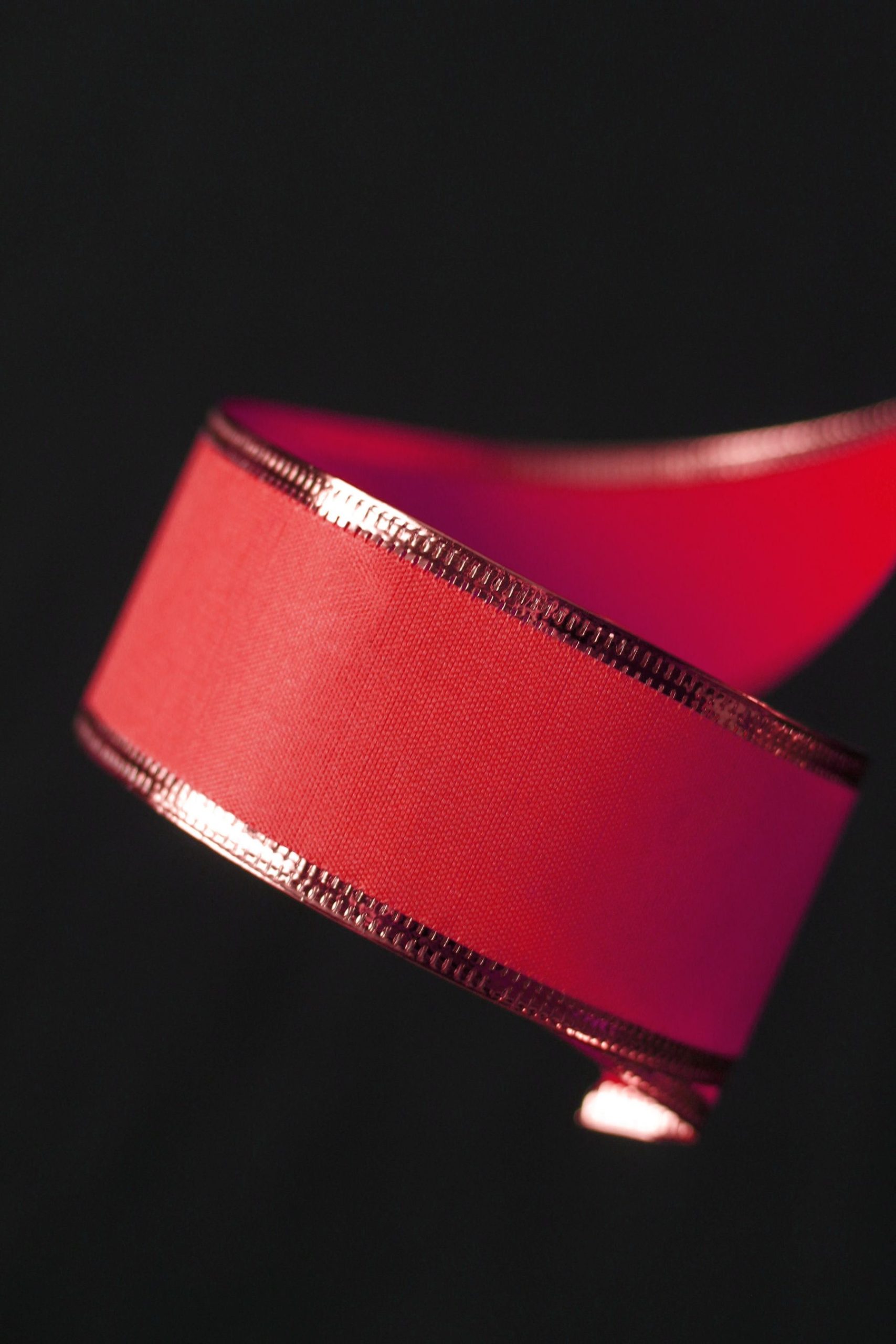
Satin and grosgrain are both usually woven from polyester. What differs is how the yarns interlace, and that alone produces two surfaces that look and behave nothing alike.
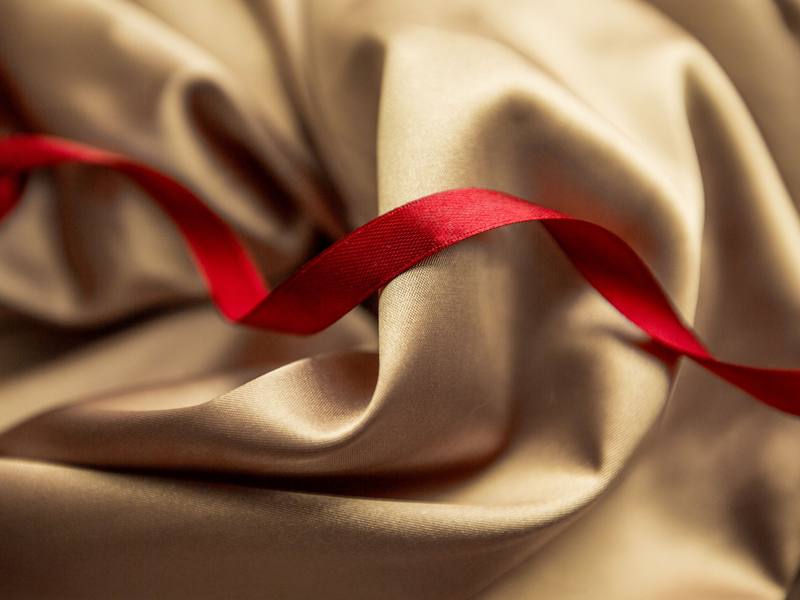
Satin: glossy, smooth, soft
Satin uses a float weave: the warp runs over several wefts before passing under. Fewer interlacing points means a flat surface that reflects light evenly, which is where the characteristic sheen comes from.
Satin ribbon comes single-faced (matt on the back, cheaper) or double-faced. If the ribbon will be twisted or tied into a bow, the back will certainly show, so it has to be double-faced.
The drawback: the glossy face scratches and snags easily. The same floating yarns that create the sheen are the ones left exposed to catch.
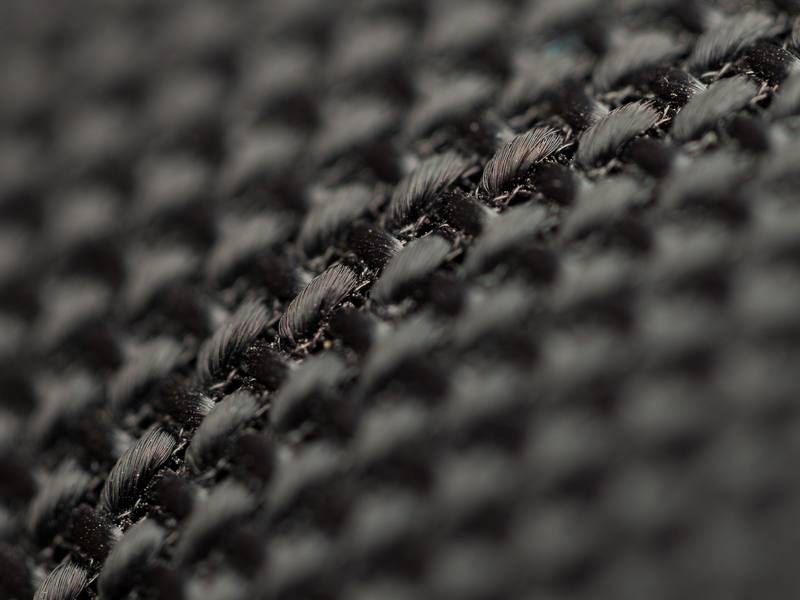
Grosgrain: matt, ribbed, tough
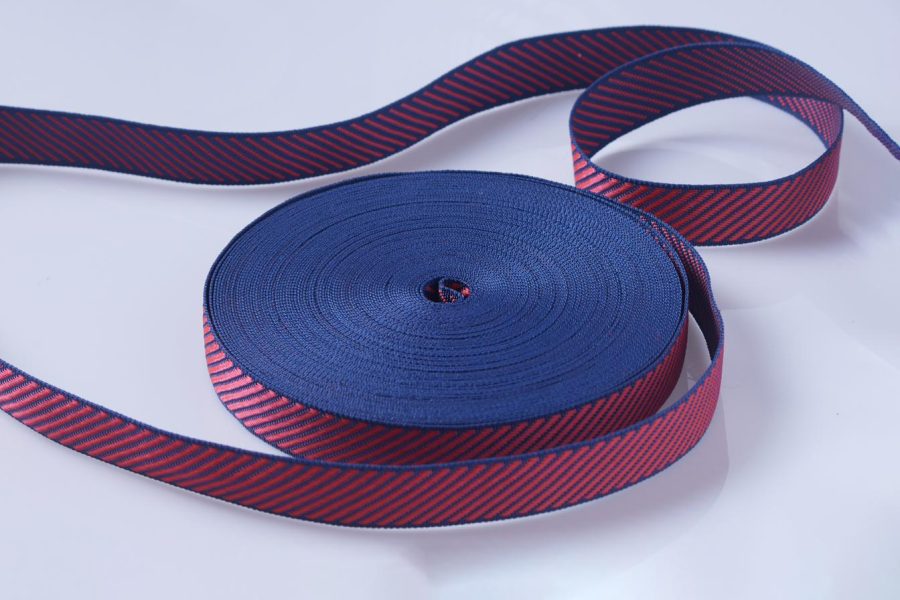
Grosgrain carries fine ribs running across the width, clearly felt under a fingertip. The weave has many more interlacing points, so the ribbon is thicker, firmer and matt.
What it gives up in sheen it gains in durability: better abrasion resistance, far less snagging, and it holds a fold, so a grosgrain bow stands up instead of collapsing. The edges are stiffer too and curl less.
Want sheen and soft drape, use satin. Want a bow that holds its shape and survives handling, use grosgrain.
Choosing by application
- Gift wrap, premium boxes, event decoration: double-faced satin.
- Hair bows, lanyards, anything handled constantly: grosgrain.
- Decorative trim on garments: a style call, but grosgrain washes better.
- Printing or embroidering a logo on the tape: grosgrain holds ink and stitches better thanks to the textured surface.
One note when ordering
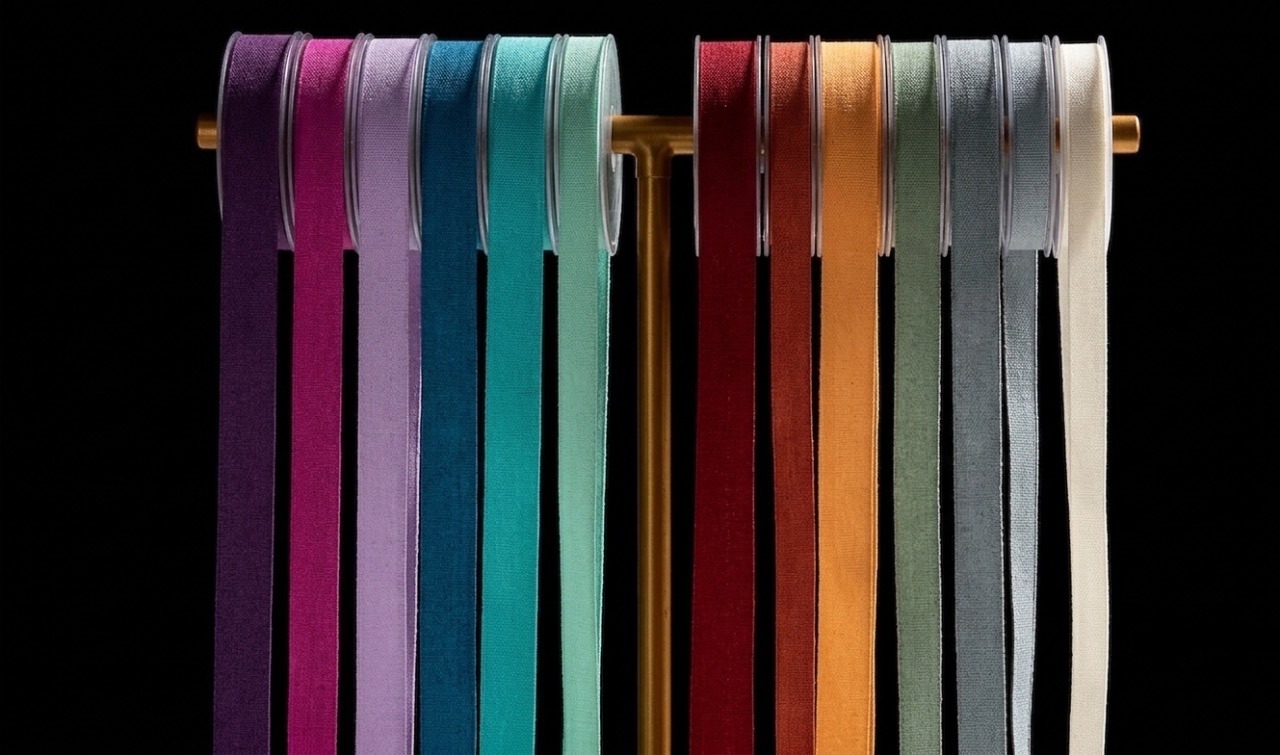
At the same colour reference, satin always looks deeper and more saturated than grosgrain, because the glossy surface returns more light. If one product uses both and they need to read as the same colour, say so at the start so the maker can adjust the dye recipe for each construction.